

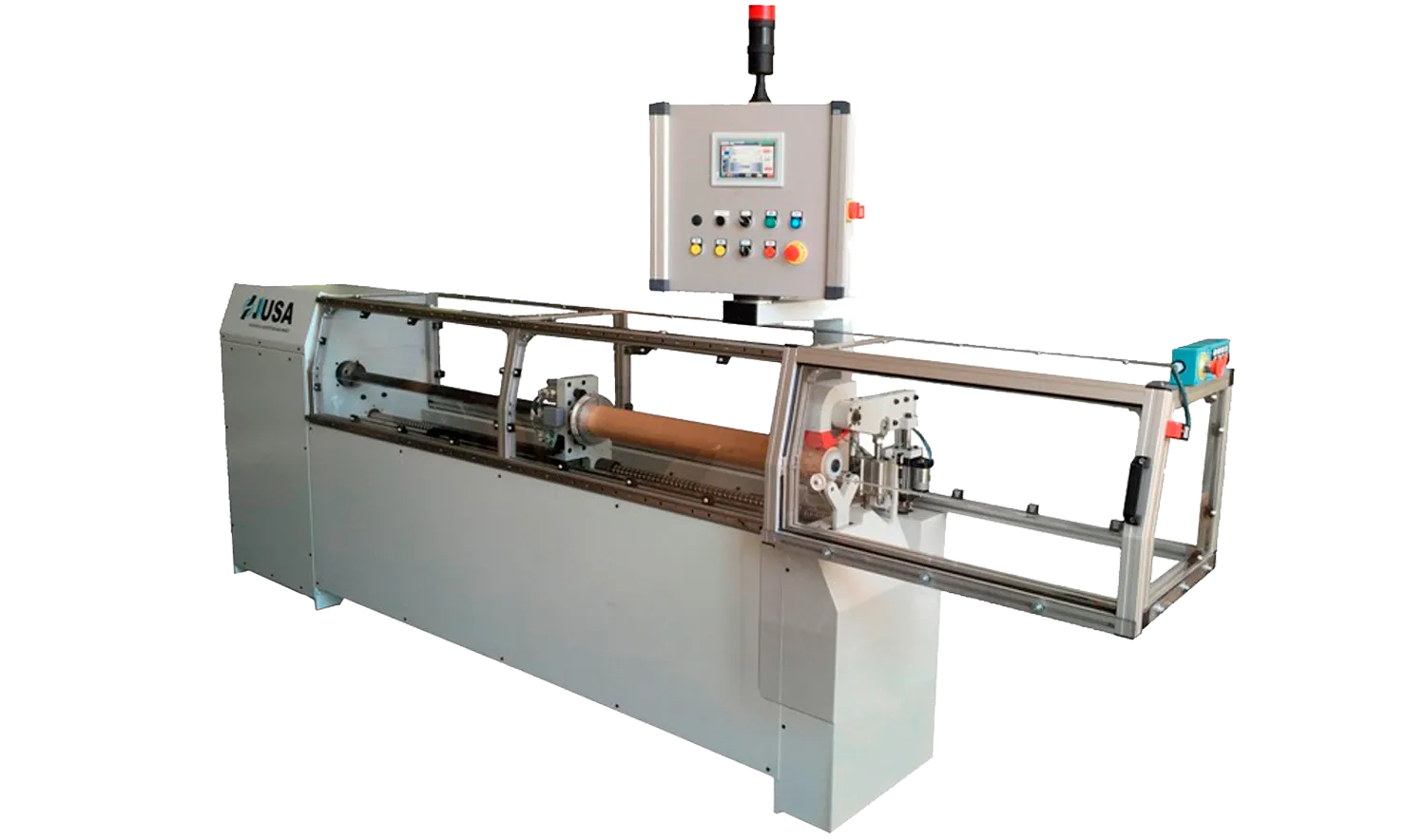
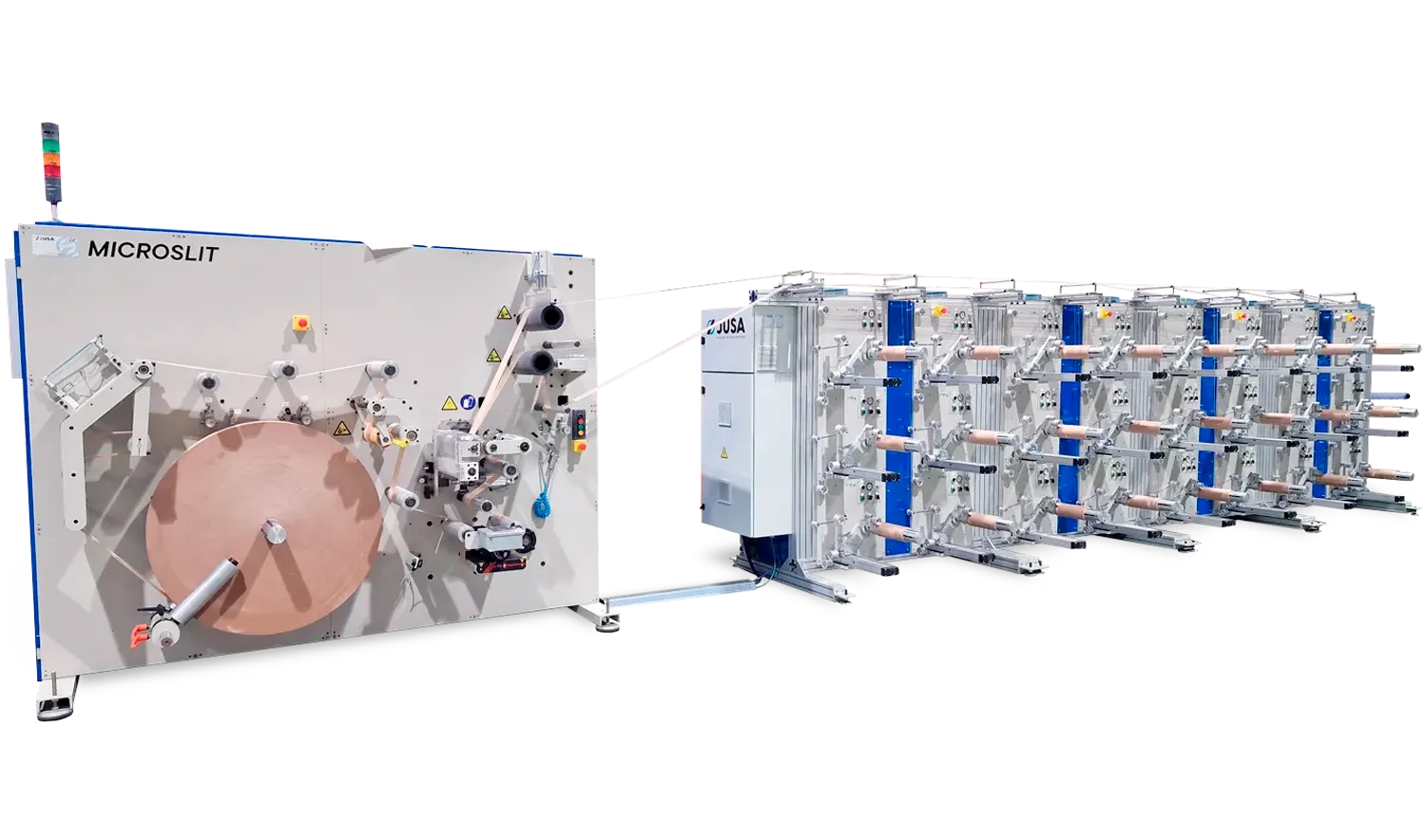

In the converting and flexible packaging industry, improving operational efficiency is a constant priority. To overcome the limitations of manual adjustments, integrating an automatic slitter rewinder has become a standard solution for manufacturers looking to increase production capacity, eliminate bottlenecks and reduce material waste.
How Does Automation Work in Slitting and Rewinding?
Traditional processes require operators to stop the production line to reposition blades, adjust brakes and manually monitor material alignment. Automatic equipment, on the other hand, reduces these interventions through a centralized PLC control system that manages operating parameters in real time:
-
Programmable slitting positioning: The machine adjusts blade positions according to production recipes previously stored in the system.
-
Continuous tension control: Electronic control systems automatically regulate web tension to prevent wrinkles in plastic films, paper and laminated materials.
-
Web alignment: Integrated photoelectric sensors detect and correct material deviations during high-speed operation.
For further information on the latest technological developments in industrial machinery, you can visit Interempresas Packaging, a leading industry publication.
Automatic Slitter Rewinder Models at JUSA Converting
At JUSA CONVERTING, we design and manufacture different automatic slitter rewinder configurations to meet the specific requirements of each material and production format:
-
High-Production Turret Systems: If your production process requires roll changes without stopping the line, the SR-TURRET automatic dual-turret slitter rewinder and the SR-TURRET AST automatic turret model, specifically designed for adhesive tapes, provide maximum continuous production output.
-
Large-Diameter Roll Processing: For large parent rolls, the SR-BIG ROLL automatic slitter rewinder provides the robustness required to handle heavy rolls while maintaining cutting and rewinding precision.
-
Production Versatility and Flexibility: The SR-2 automatic slitter rewinder and the SR-3 model offer an excellent balance between format flexibility and fast setup times, making them suitable for medium production runs and frequently changing requirements.
-
Narrow-Width Slitting: For precision applications involving narrow materials, the TSR-2 automatic slitter rewinder features a specific axial drive system designed for small-width materials and narrow strips.
Key Benefits of Automating Your Converting Line
-
Reduced Changeover Time: Switching between production formats can take just a few minutes, depending on the equipment configuration, maximizing machine availability and reducing downtime.
-
Reduced Material Waste (Scrap): Maintaining consistent web tension from the beginning of the process helps significantly reduce rejected material and improve production efficiency.
-
Improved Operational Safety: Reducing direct handling of cutting blades and pneumatic shafts helps create a safer working environment for operators.
Frequently Asked Questions About Automatic Slitter Rewinders
What Is the Difference Between an Automatic and a Manual Slitter Rewinder?
An automatic slitter rewinder manages blade positioning, tension control and the rewinding cycle through PLC programs operated via a touchscreen interface, reducing setup times to just a few minutes.
A manual machine requires operators to physically adjust each component before starting production and, in some cases, during the rewinding process. This includes adjusting unwinding and rewinding tension, as well as the pressure applied by the lay-on roller.
What Types of Materials Can Be Processed?
These machines can process a wide range of flexible materials, including plastic films (PE, PP, PET), paper, paperboard, aluminum foil, laminated materials and non-woven fabrics.
The specific materials that can be processed depend on the machine configuration, cutting system and technical characteristics of each application.
When Is Investing in an Automatic Slitter Rewinder Profitable?
Investing in an automatic slitter rewinder can be highly profitable when a manufacturing facility handles sufficient production volumes to justify integrating slitting and rewinding equipment into its production process.
This is particularly relevant when frequent format changes are required, high-value materials are processed or a reliable supply of converted materials must be maintained for internal or external customers.
An automatic slitter rewinder also enables companies to reduce their dependence on external suppliers, improve operational efficiency and respond more effectively to unexpected production challenges.
What Maintenance Does an Automatic Slitter Rewinder Require?
Although automatic slitter rewinders incorporate advanced electronic components and PLC systems, preventive maintenance can be straightforward when performed according to the manufacturer’s recommendations.
Maintenance tasks mainly include cleaning and calibrating web-guiding sensors, scheduled lubrication of guide shafts and regular inspection of cutting blade wear.
In addition, many of these machines support remote diagnostics and technical assistance, allowing software-related issues to be resolved without requiring an on-site technician.
Looking for an Automated Solution for Your Production Facility?
Choosing the right equipment depends on the type of material, roll diameter and production volume required by your company.
Explore our complete range of JUSA industrial slitter rewinders or contact our technical team for personalized advice on the most suitable solution for your production needs.