


Processing wide rolls comes with its own challenges, but when production requires slitting strips just a few millimeters or centimeters wide, the physics of the process changes completely. When handling small rolls and narrow webs, even the slightest variation in material thickness or a minor fluctuation in winding tension or pressure can compromise the geometry of the finished roll.
Producing stable, compact rolls without the dreaded telescoping effect requires moving beyond conventional slitting methods and investing in technology specifically designed for narrow-width applications.
Why Do Conventional Slitting Methods Fail with Narrow Widths?
The main challenge when processing narrow webs is uneven tension. If you attempt to rewind 20 rolls, each 15 mm wide, on the same rigid shaft, microscopic variations in material thickness can cause the rolls in the center to experience greater pressure than those at the ends. The result is loosely wound rolls on one side and deformed rolls on the other.
To overcome this challenge, three technical factors are essential:
-
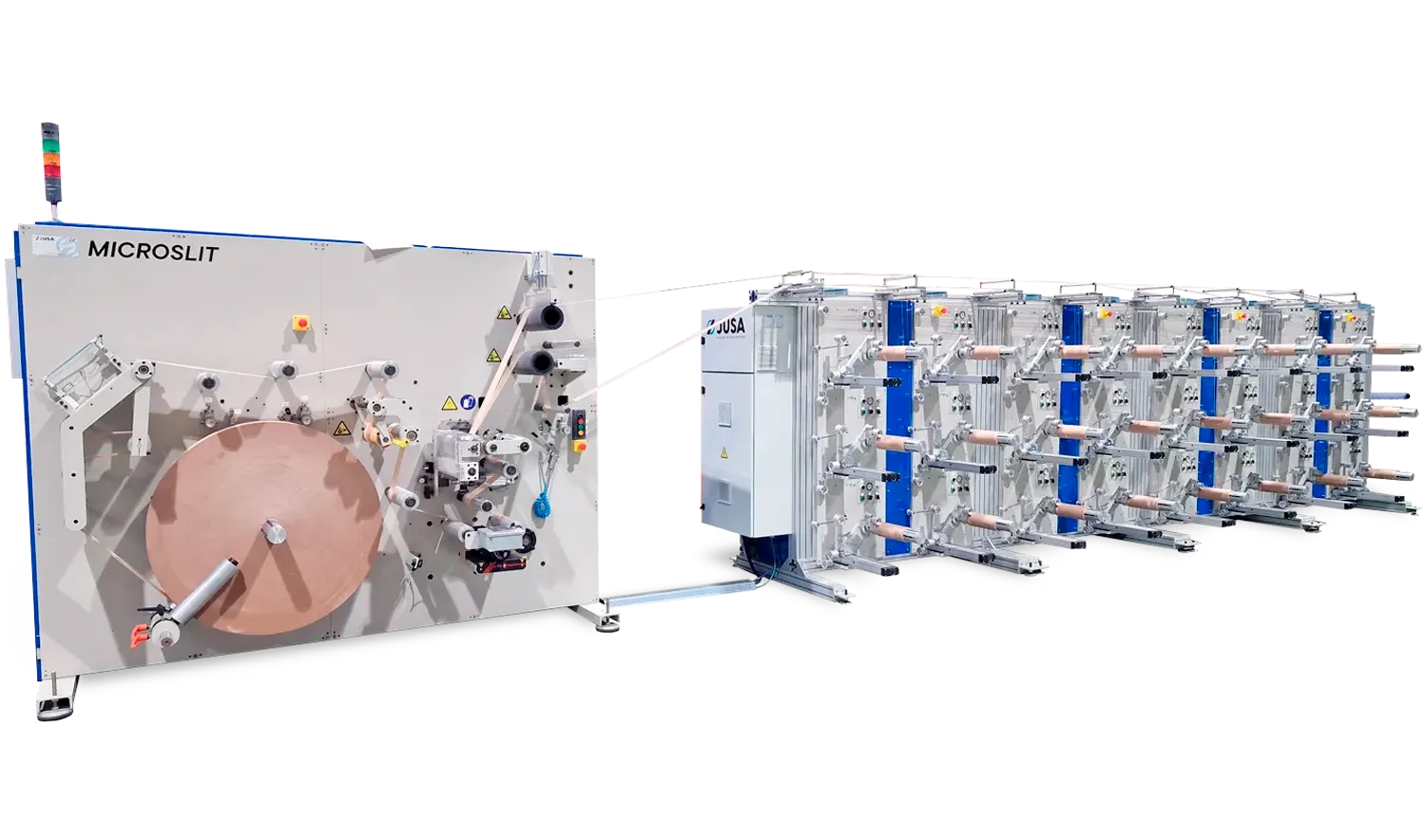
Independent friction control using differential shafts: These allow each small roll to adjust its rotational speed independently according to its actual diameter at any given moment.
-
High-precision shear slitting systems: These help prevent continuous friction from melting or fraying the edges of elastic films and technical materials.
-
Core pressure control: This prevents the inner cardboard core from being crushed while maintaining the structural integrity of the finished roll.
For further information on international standards and technical developments in the narrow web industry, you can explore the resources provided by the European association FINAT.
Industry Applications: Which Machine Is Best Suited to Each Process?
Slitting adhesive tape requires different technology from rewinding medical-grade aluminum foil or self-adhesive labels. At JUSA CONVERTING, we approach the design and manufacture of each slitter rewinder for narrow rolls by analyzing how the material behaves under actual production conditions.
1. Narrow Web Labeling and Quality Control
When the objective is to detect imperfections at high speeds in small paper or film rolls, a dedicated machine such as the SR2-D1 inspection rewinder is a suitable solution. It allows operators to inspect the material and correct tension-related issues while maintaining an efficient production workflow.
2. High-Volume Production of Adhesive Tapes and Materials
For commercial applications where maximizing hourly output is essential, such as adhesive tapes or technical paper rolls, turret automation offers significant advantages.
The SR-TURRET with automatic dual-turret system enables rapid roll changes and unloading of small rolls, helping maximize production efficiency and minimize downtime.
3. Sealing Strips, Laminates and Delicate Materials
When processing elastic materials or laminated structures in small formats, controlled axial drive systems are essential.
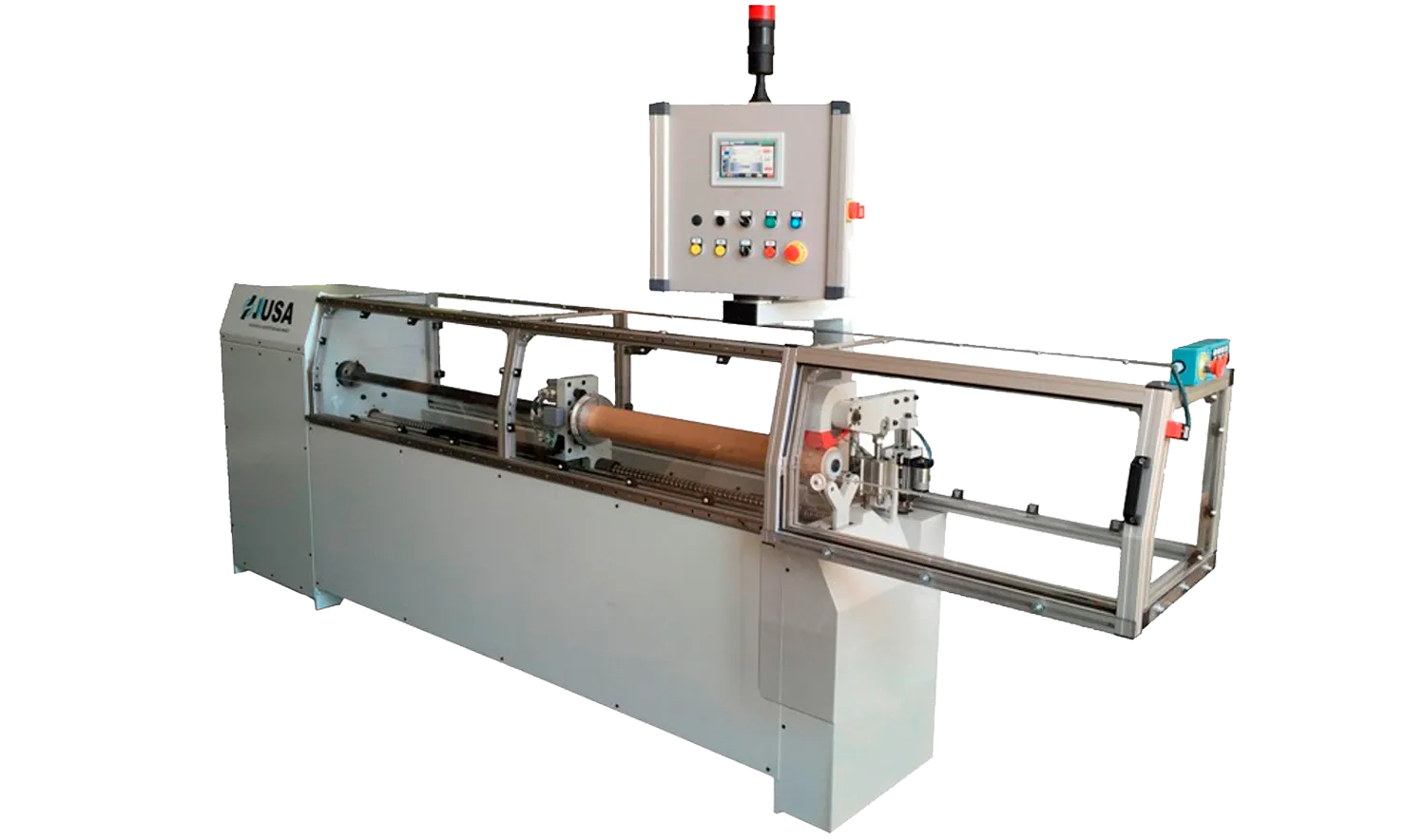
For these applications, the TSR-2 automatic slitter rewinder provides precise material handling and stable rewinding performance, even when working with extremely narrow widths.
Rotary Shear Slitting vs. Crush Cutting: Which System Should You Choose?
One of the most common questions when configuring a slitter rewinder for small rolls concerns the most suitable cutting system.
As a general rule, shear slitting (circular blade and counter-blade) is often the preferred option for achieving clean, burr-free edges in plastic films (PE, PP, PET) and paper.
On the other hand, crush cutting or razor blade slitting may be more suitable for very thin materials or processes requiring rapid width adjustments without dismantling the slitting shaft assembly.
The final choice depends on the material’s properties, thickness, desired edge quality and production requirements.
Frequently Asked Questions
What Width Is Considered Narrow Web Slitting or Small Roll Processing?
Narrow web slitting or small roll processing generally refers to cutting widths ranging from just a few millimeters (5–10 mm) up to approximately 300 mm.
This range is commonly found in industries such as label manufacturing, adhesive tapes, electrical insulation, batteries, automotive components and medical packaging.
Which Slitting System Is Best for Narrow Rolls: Rotary Shear, Razor Blade or Crush Cutting?
Rotary shear slitting, using a circular blade and counter-blade, is ideal for achieving clean, burr-free edges in thicker plastic films and paper.
Crush cutting is commonly used for adhesive tapes and technical foams, while razor blade slitting is typically suitable for very thin or elastic materials and applications requiring quick format changes without dismantling the slitting shafts.
The most suitable system depends on the characteristics of the material and the required cutting quality.
How Does a Slitter Rewinder for Small Rolls Prevent Core Crushing?
Core crushing can be prevented through differential shafts and precise control of rewinding tension and pressure.
These systems allow the appropriate winding force to be applied to each roll, ensuring that the finished roll remains firm and stable without deforming the cardboard or plastic core.
What Operating Speeds Can Be Achieved When Rewinding Narrow Widths?
Although operating speed depends on material elasticity, thickness and other processing conditions, modern machines equipped with differential shafts and electronic web guiding systems can process small rolls at speeds ranging from 200 to 800 meters per minute.
The actual achievable speed depends on the equipment configuration, material characteristics and the stability and quality required in the finished roll.
Optimize the Precision of Your Narrow Web Converting Line
Ensuring consistent quality in small rolls requires specialized engineering solutions. If your current production lines generate excessive material waste or struggle to maintain stability when processing narrow widths, our engineering team can help you optimize your converting process.
Explore our Industrial Engineering and Technical Consulting Services at JUSA or contact us to discuss the technical specifications of your project.