


Packaging process optimization helps improve productivity, reduce waste and minimize downtime in production lines that handle plastic films, paper, aluminum foil, laminates and other flexible materials used in packaging manufacturing.
It is not simply about increasing production speed. Efficiency depends on the coordination of operations such as slitting, rewinding, core preparation, format changeovers and roll handling.
What Does Packaging Process Optimization Mean?
Optimizing a packaging process involves analyzing each stage of the production line to identify where time, material or production capacity is being lost.
In the converting industry, optimization focuses particularly on transforming material rolls into the formats required for subsequent manufacturing stages.
Some of the main aspects to evaluate include:
-
Production speed and actual equipment performance.
-
Slitting precision.
-
Tension control and web stability.
-
Roll changes and loading and unloading operations.
-
Core preparation.
-
Automation of repetitive operations.
-
Machine downtime and adjustments.
-
Material waste and finished roll quality.
The objective is to achieve a more stable, repeatable process adapted to actual production requirements without compromising the quality of the converted material.
Identifying Production Line Bottlenecks
Before investing in new machinery or automation, it is important to understand which part of the process is actually limiting production.
For example, increasing the speed of a slitter rewinder will not improve overall efficiency if the next stage cannot handle the additional output or if loading, unloading and core preparation operations cause frequent downtime.
Key questions to analyze include:
-
Which operations take the most time?
-
Where do most production stoppages occur?
-
Which tasks depend heavily on manual intervention?
-
Which format changeovers slow down production?
-
At which stages is the most material waste generated?
It is also important to distinguish between planned downtime, such as format changeovers, and unplanned downtime caused by breakdowns or winding-related problems.
This analysis makes it possible to prioritize improvements with the greatest impact on the overall productivity of the production line.
Slitting and Rewinding in Packaging Optimization
In many converting lines, slitting and rewinding are critical stages in preparing materials for packaging applications.
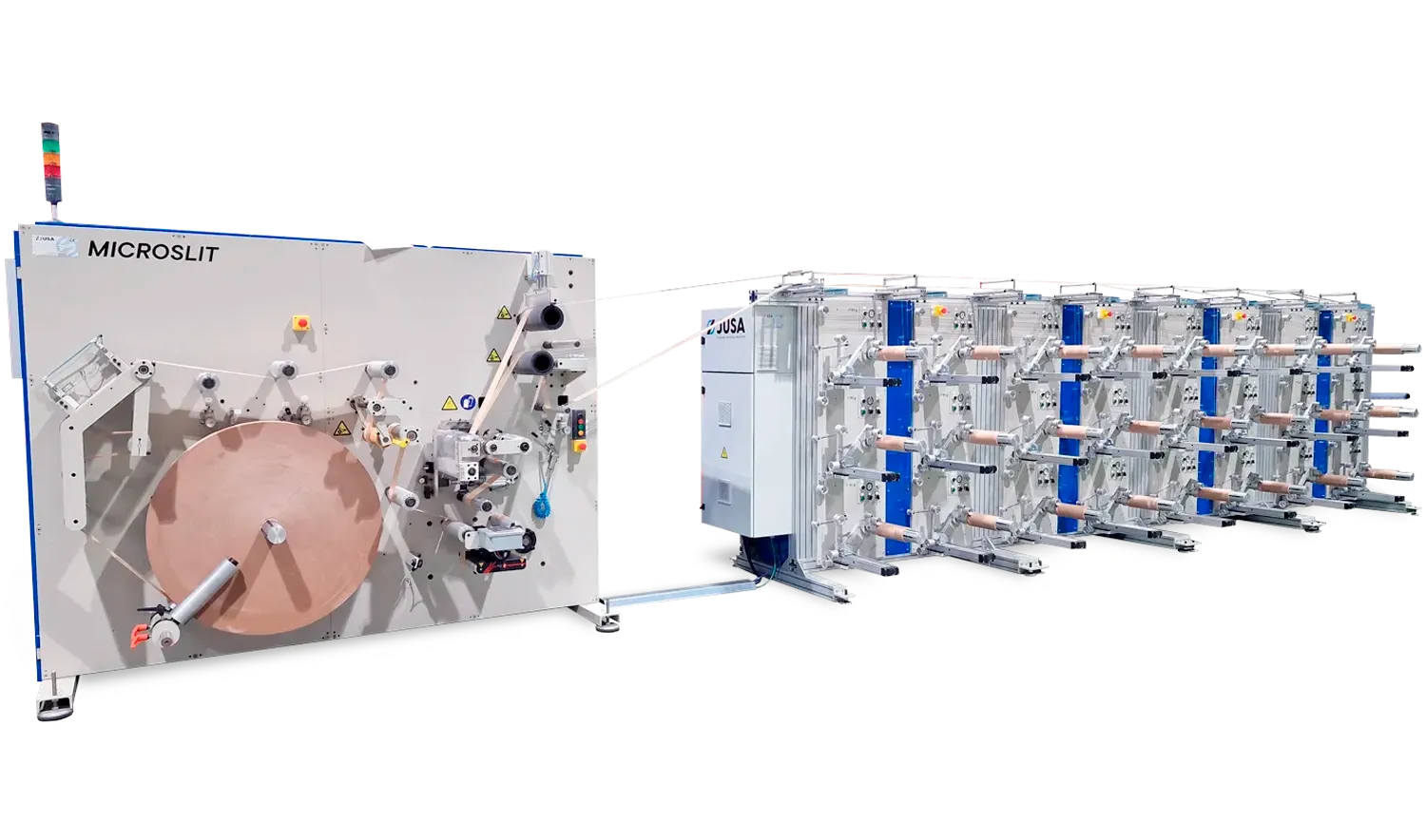
Industrial slitter rewinders transform parent rolls into narrower rolls or formats adapted to subsequent processes while maintaining control over parameters such as slitting width, web tension, final roll diameter and rewinding quality.
Incorrect machine settings can cause wrinkles, lateral displacement, uneven rolls or increased material rejection.
They can also result in rolls with unsuitable hardness, instability between layers or difficulties during handling and subsequent processing.
Optimizing this stage therefore requires a coordinated approach to the slitting system, web tension and rewinding conditions, taking into account material characteristics, roll diameters and the required finished product quality.
The choice of winding system, whether center winding, surface winding or combined center-surface winding, also affects roll formation and must be adapted to each application.
The Importance of Proper Core Preparation
The cores or tubes onto which the material is rewound also influence process stability.
Incorrect core lengths, imprecise cutting or slow preparation can cause problems during rewinding, affect roll formation and increase downtime between production runs.
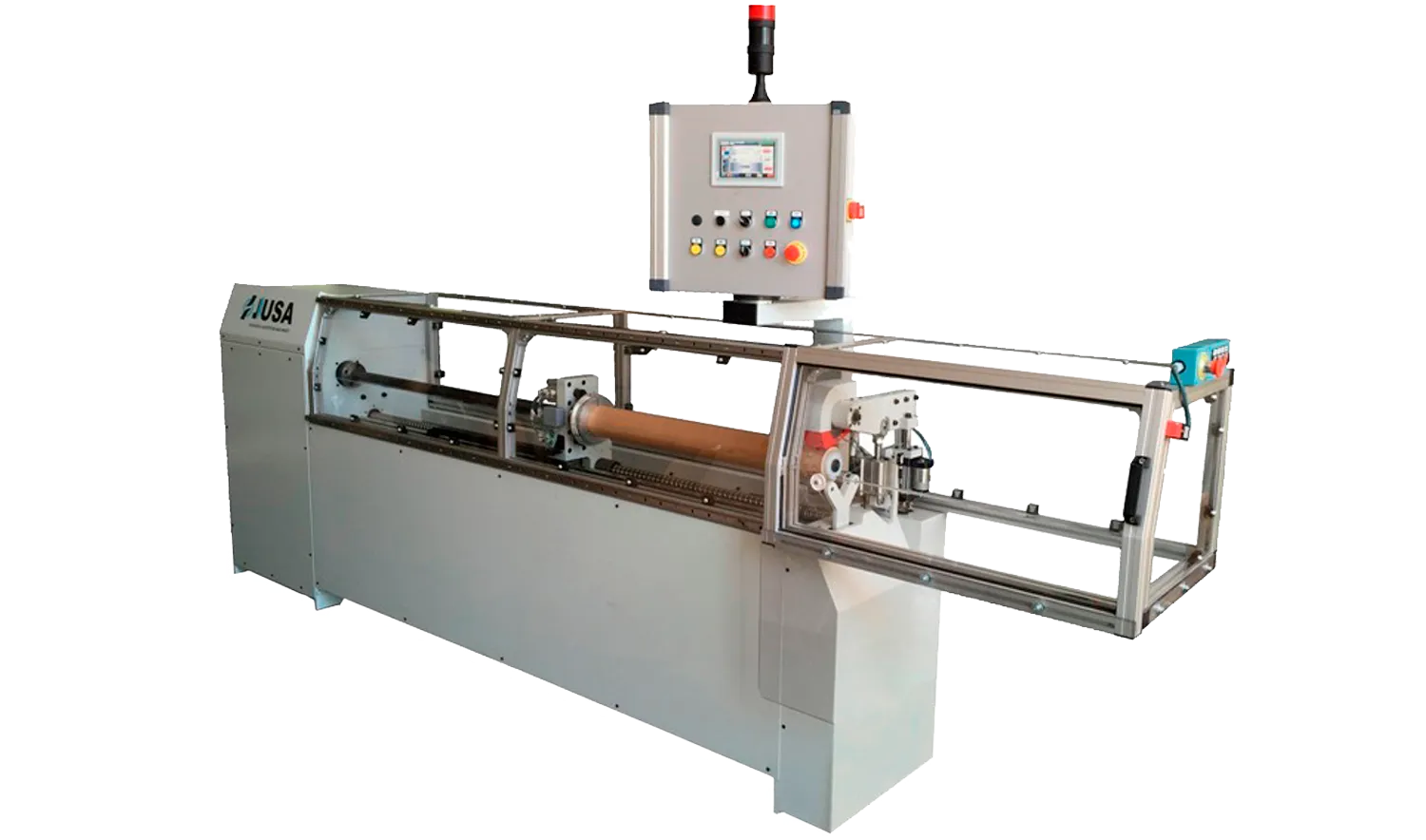
Core cutting machines prepare cardboard tubes and other compatible materials according to the dimensions required for each format. Manual, semi-automatic and automatic solutions are available, depending on tube characteristics and production volume.
For example, when a slitter rewinder processes rolls of different widths, having cores pre-cut to the correct length facilitates format changeovers and prevents interruptions caused by a lack of prepared cores.
Automating this stage can help reduce preparation times and improve cutting repeatability, particularly in facilities with high core consumption.
Reducing Changeover Times
Packaging and converting lines frequently process different widths, materials and formats.
Each changeover may require adjustments to blade positions or types, tension settings, cores, rewinding shafts or machine configurations.
Several measures can help reduce these times:
-
Save production recipes on machines equipped with this functionality.
-
Simplify adjustments and standardize the most frequently used configurations.
-
Automate repetitive parameter adjustments.
-
Facilitate tool positioning through systems such as automatic knife positioning.
-
Standardize preparation, loading and unloading procedures.
When numerous changeovers are performed during a single shift, saving just a few minutes on each one can significantly improve overall productivity.
It is also advisable to prepare cores and other necessary components before stopping the machine, provided operating and safety conditions allow it.
Automation: When Does It Add Value?
Automation plays an important role in packaging process optimization, particularly when it reduces unproductive time, improves repeatability and facilitates production operations.
Automation can be applied to tasks such as:
-
Roll loading and unloading.
-
Slitting and knife positioning.
-
Rewinding and automatic roll changes.
-
Core preparation.
-
Regulation of tension, speed and other operating parameters.
-
Material handling.
Depending on equipment configuration, these solutions can reduce certain manual interventions and maintain more stable production conditions.
For example, slitter rewinders equipped with automatic turret systems can facilitate roll changes and reduce the interruptions associated with this operation.
Similarly, auxiliary equipment such as roll unloading systems or automatic knife positioning systems can help optimize specific stages of the process.
However, more automation does not always mean better productivity.
The appropriate level depends on production volume, format variety and changeover frequency. A highly flexible production line may require a different solution from a facility dedicated to long, continuous production runs.
Before implementing automation, it is therefore essential to evaluate potential time savings, reduced manual intervention and the investment required for each solution.
Measuring the Effectiveness of Process Optimization
Improvements should be assessed using objective performance indicators.
Some of the most useful KPIs include:
-
Cycle time and actual production output per hour or shift.
-
Planned and unplanned downtime.
-
Percentage of material waste relative to total material processed.
-
Format changeover time.
-
Productivity per shift and equipment availability.
-
Number of rejected or reprocessed rolls due to slitting or rewinding defects.
Another useful indicator is OEE (Overall Equipment Effectiveness), which combines availability, performance and quality to evaluate overall equipment efficiency.
Comparing these values before and after implementing an improvement makes it possible to determine whether production line efficiency has actually increased.
For example, if a slitter rewinder operates at a good production speed but frequently stops to unload finished rolls, analyzing unloading times may reveal a greater improvement opportunity than increasing slitting speed.
Machinery Adapted to the Production Process
One of the most important aspects of packaging process optimization is avoiding situations where the entire production process must adapt to the limitations of a standard machine.
Variables such as material type, thickness, web width, unwinding and rewinding diameters, operating speed and level of automation can vary significantly between manufacturing facilities.
At JUSA Converting, we design and manufacture machinery solutions for slitting, rewinding and core preparation, adapted to different industrial requirements.
Our technical team analyzes material characteristics, production conditions and the specific requirements of each facility to define the most suitable machine configuration.
We also provide technical consulting and maintenance services to help improve the performance of both new and existing equipment.
The key is to analyze the entire process and select technology based on actual production requirements.
Looking to improve the efficiency of your converting line? Contact our technical team to explore solutions that can help reduce downtime, optimize resources and improve finished roll quality.
Frequently Asked Questions
Where Should You Start When Optimizing Packaging Processes?
Start by analyzing downtime, production bottlenecks, material waste, format changeovers and manual operations that affect productivity.
In converting processes, it is also important to evaluate slitting quality, rewinding stability and roll loading and unloading times.
How Does Tension Control Affect Production Efficiency?
Incorrect web tension can cause wrinkles, deformation, material displacement and rewinding problems.
Maintaining tension within the appropriate range for each material improves process stability and helps reduce rejected rolls caused by winding defects.
Does Automation Always Improve Productivity?
Not necessarily. Automation must be adapted to production volumes, format variety and the overall operation of the production line to deliver measurable improvements.
It is important to identify the operations responsible for the greatest time losses before determining which level of automation offers the best return on investment.
Is It Necessary to Replace All Machinery to Optimize the Process?
No. In many cases, performance can be improved by adjusting operating parameters, automating specific operations, upgrading components or eliminating particular bottlenecks.
Adding auxiliary equipment, implementing preventive maintenance or modernizing selected systems can also help improve the performance of existing machinery.