


Improving OEE (Overall Equipment Effectiveness) means increasing the actual efficiency of industrial equipment by focusing on three factors: availability, performance, and quality. To achieve this, it is essential to reduce downtime, maintain an appropriate production speed, and minimize defective products.
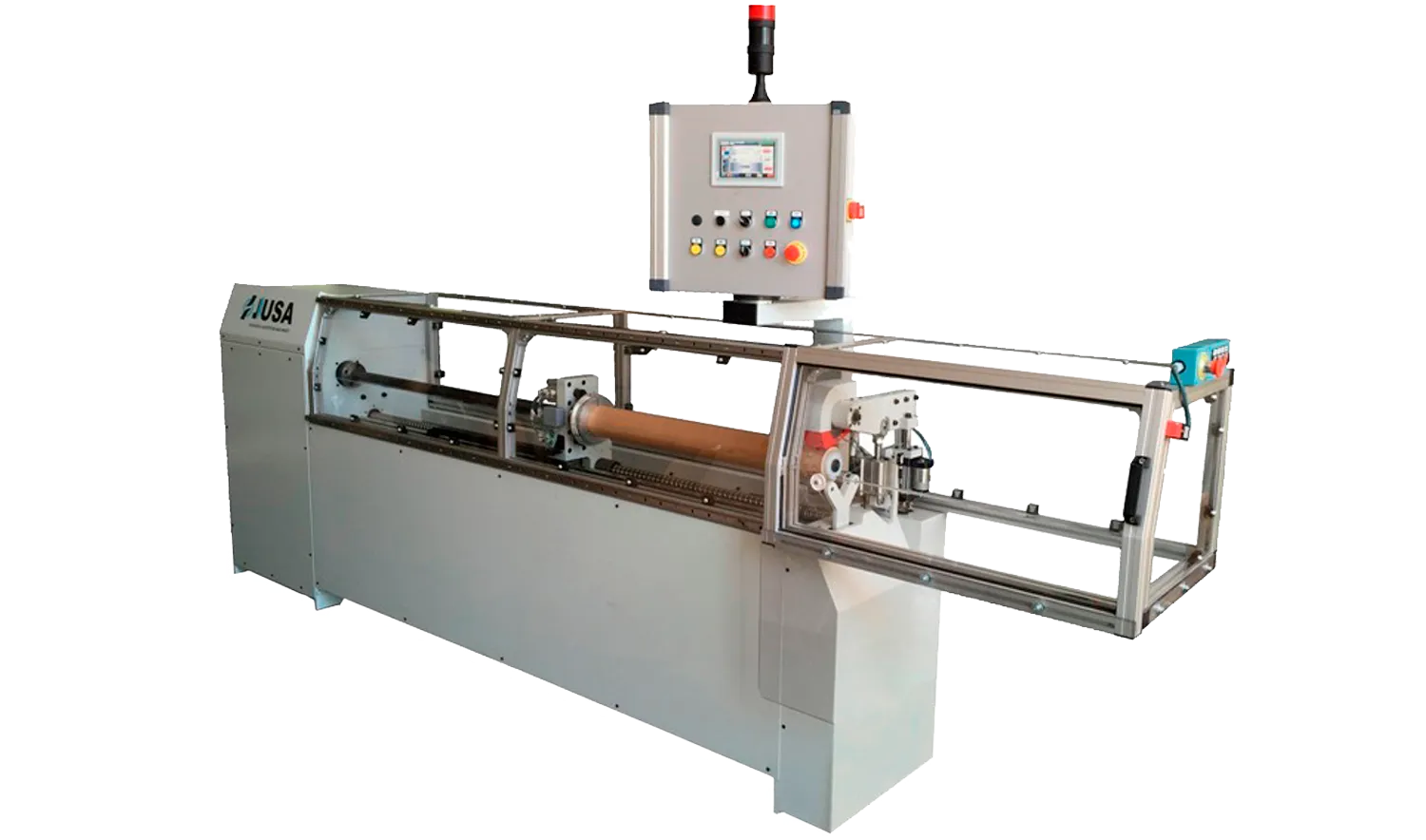
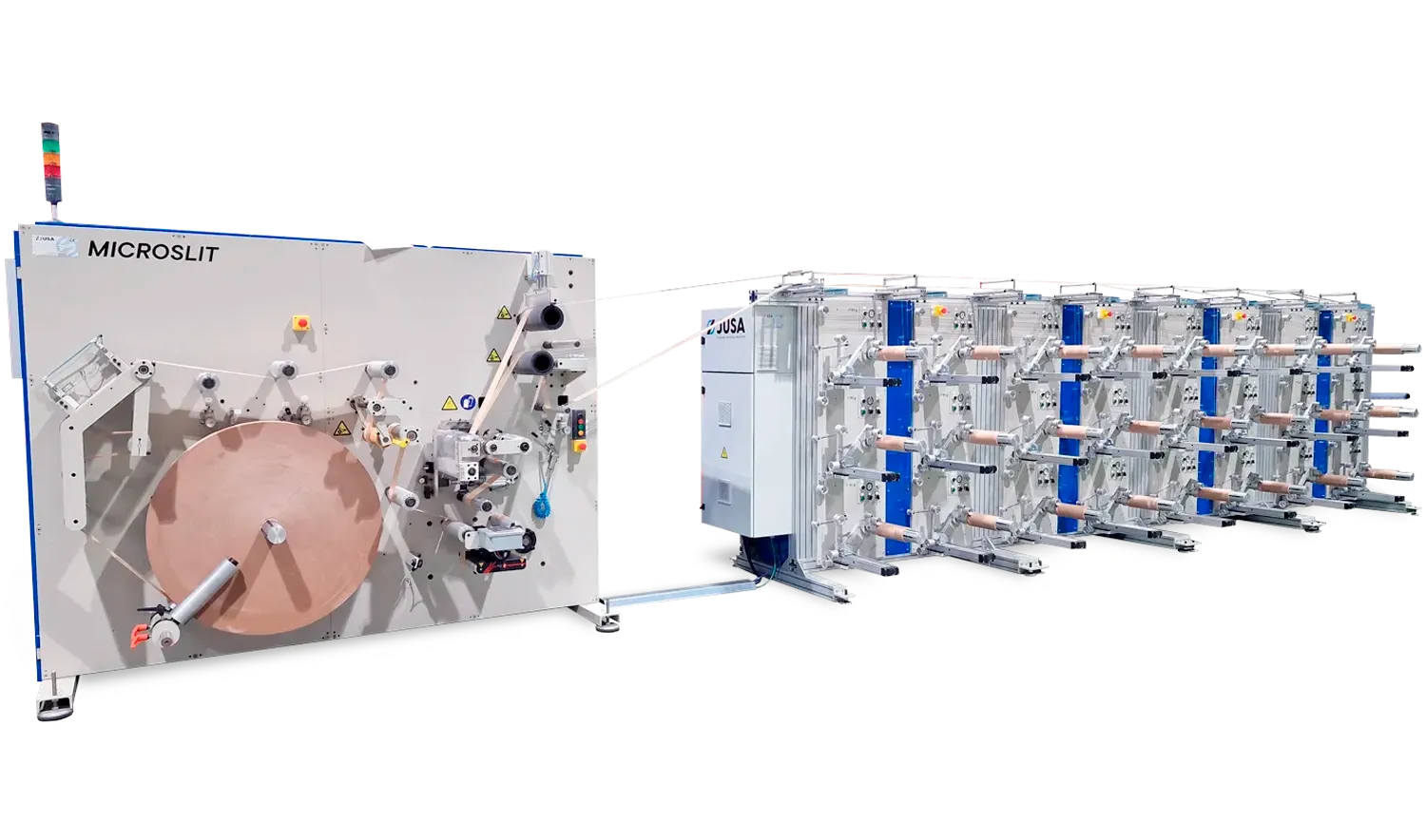
In sectors such as converting and packaging, an OEE improvement strategy should pay particular attention to roll changes, machine adjustments, tension control, and material waste. Having industrial slitter rewinders tailored to production requirements can help optimize these processes.
However, improving OEE is not simply about installing faster machinery. The real objective is to identify the factors limiting productivity and implement measurable improvements that make better use of existing production capacity.
What Is OEE and Why Is It Important in Industry?
OEE, or Overall Equipment Effectiveness, is a metric used to measure how effectively a machine’s production capacity is utilized during scheduled production time.
This indicator combines three fundamental factors:
-
Availability: measures how long the equipment actually operates compared to the planned production time.
-
Performance: compares actual output with the output that could be achieved at the reference production speed.
-
Quality: determines the proportion of manufactured products that meet the established requirements.
OEE helps identify productivity losses that may otherwise go unnoticed when only the quantity of material produced is analyzed.
For example, a slitter rewinder may operate for most of the working day and still have a low OEE due to frequent minor stoppages, lower-than-expected speeds, or rolls that require reprocessing.
How to Calculate the OEE of an Industrial Machine
The formula used to calculate Overall Equipment Effectiveness is:
OEE (%) = Availability × Performance × Quality × 100
All three factors must be entered as decimal values.
To understand the calculation, consider a slitting and rewinding line with the following results during a working shift:
| Indicator | Result |
|---|---|
| Planned production time | 480 minutes |
| Actual operating time | 432 minutes |
| Availability | 90% |
| Performance | 85% |
| Quality | 95% |
Applying the formula:
OEE = 0.90 × 0.85 × 0.95 × 100 = 72.68%
This means that the line achieves approximately 72.7% overall effectiveness relative to its reference capacity during planned production time.
The result provides a starting point for identifying the main sources of production losses.
There is no universal target value suitable for every facility. Interpretation should take into account the type of machinery, the product, the reference speed, and the characteristics of the process.
Strategies to Improve OEE in a Production Line
An effective strategy must address the actual causes of productivity losses. In a converting line, these losses may be related to format changes, tension adjustments, mechanical issues, or rewinding defects.
1. Reduce Downtime
Downtime is one of the factors that directly affect equipment availability.
In slitting and rewinding processes, stoppages may occur for several reasons:
-
Finished roll changes.
-
Material replacement.
-
Blade adjustments.
-
Web transport system issues.
-
Maintenance operations.
-
Feeding or unwinding problems.
To reduce their impact, it is advisable to record the causes of each stoppage and establish priorities based on their frequency and duration.
Automation can also help reduce certain manual operations.
For example, JUSA Converting’s SR-TURRET automatic slitter rewinder features a dual-turret system, automatic cross-cutting, and automated unloading options.
These features help optimize roll changeover and handling operations, reducing manual intervention during certain stages of the process.
The specific impact on OEE will depend on operating conditions and the downtime recorded before implementing the solution.
2. Optimize Production Speed
Performance is another fundamental component of OEE.
A machine may be available for almost the entire working day but still operate below its reference production capacity.
In converting processes, this situation may be related to:
-
Speeds limited by material characteristics.
-
Incorrect tension settings.
-
Web guiding problems.
-
Frequent minor stoppages.
-
Inefficient machine configurations.
-
Limitations in upstream or downstream processes.
To improve performance, it is important to analyze actual production speed and compare it with an appropriate technical reference for each product.
Increasing speed to the machine’s maximum capacity is not always advisable. If doing so causes defects, material breakage, or additional interruptions, overall effectiveness may decrease.
The optimal speed is the one that maintains a balance between productivity, stability, and quality.
3. Improve Slitting and Rewinding Quality
Quality directly affects OEE because rejected products or those requiring reprocessing reduce usable output.
In flexible material converting, some common defects include:
-
Rolls with uneven tension.
-
Alignment problems.
-
Inaccurate cuts.
-
Wrinkles or material deformation.
-
Edge defects.
-
Rolls that do not meet the required specifications.
To reduce these issues, it is important to control operating parameters and adapt machine settings to the properties of the material.
For example, the SR-2 slitter rewinder incorporates tension control systems and slitting and rewinding solutions designed to handle different materials and formats.
Proper tension regulation can help maintain web stability and reduce winding-related problems.
4. Reduce Setup and Format Changeover Times
In industrial lines that handle different products, changeovers can account for a significant proportion of non-productive time.
Each change in slitting width, material type, or roll diameter may require additional adjustments.
An OEE improvement strategy should analyze these operations to identify which ones can be simplified.
Recommended actions include:
-
Standardize format changeover procedures.
-
Prepare tools and materials before stopping the machine.
-
Identify adjustments that can be performed externally and safely.
-
Improve positioning and configuration systems.
-
Measure the time required to complete each changeover.
These measures are related to the SMED methodology, which focuses on reducing equipment setup times.
5. Implement Preventive Maintenance
Unexpected breakdowns affect availability and can lead to significant production losses.
For this reason, improving OEE requires combining production data analysis with an appropriate maintenance strategy.
Some useful actions include:
-
Regularly inspect mechanical components.
-
Check the condition of blades and cutting elements.
-
Verify tension and web transport systems.
-
Inspect sensors and control devices.
-
Record recurring incidents.
-
Schedule maintenance according to the manufacturer’s recommendations.
Preventive maintenance helps identify certain problems before they cause a stoppage, although it must be adapted to actual operating conditions.
What Is the Relationship Between Industrial Automation and OEE?
Automation can improve the performance of an industrial production line by reducing manual intervention, simplifying certain operations, and maintaining more precise control over production parameters.
In converting lines, these improvements can be applied to unwinding, slitting, roll changes, and rewinding.
Potential benefits include:
Greater Production Continuity
Automated systems can reduce the time required to perform certain repetitive operations.
Control of Operating Parameters
Tension regulation and web guiding systems help maintain more stable operating conditions.
Reduction of Operational Errors
Automating specific operations can limit certain variations associated with manual adjustments.
Better Utilization of Machine Capacity
Integrating different operations can reduce non-productive time when the process is properly designed and configured.
For example, in facilities handling large-diameter rolls, the JUSA Converting SR-BIG ROLL offers solutions for slitting and rewinding large-format materials, featuring automatic tension control and process regulation systems.
However, automation must address an identified need. Introducing new technologies without analyzing existing losses does not guarantee an improvement in OEE.
How to Implement an OEE Improvement Strategy Step by Step
To achieve measurable results, it is advisable to follow a structured process.
Step 1. Measure the Initial Situation
Collect information on availability, production speed, and products that meet quality requirements.
It is important to use consistent criteria so that results can be compared across different periods.
Step 2. Identify the Main Losses
Classify incidents according to whether they affect availability, performance, or quality.
For example, a stoppage caused by a roll change affects availability, while operating below the reference speed affects performance.
Step 3. Prioritize the Most Significant Causes
Not all incidents have the same impact.
Analyze which ones cause the greatest losses and prioritize those that can be addressed in a technically and economically feasible way.
Step 4. Implement Specific Improvements
Actions may include configuration adjustments, maintenance, staff training, operational reorganization, or automation of certain processes.
Step 5. Evaluate the Results
After implementing an improvement, recalculate OEE using the same measurement criteria.
This will help determine whether the intervention has delivered a measurable benefit.
Practical Example of OEE Improvement in a Slitter Rewinder
Consider a slitting and rewinding line with the following indicators:
| Indicator | Initial Situation | Improved Situation |
|---|---|---|
| Availability | 85% | 92% |
| Performance | 80% | 88% |
| Quality | 95% | 97% |
| OEE | 64.6% | 78.5% |
In this hypothetical example, the improvements include reduced roll changeover times, greater operating speed stability, and fewer rejected products.
The result would be an approximate increase of 13.9 percentage points in OEE.
This scenario is illustrative and does not represent actual data from a JUSA Converting installation.
Its purpose is to demonstrate that small, combined improvements in availability, performance, and quality can have a considerable impact on overall equipment effectiveness.
What Mistakes Should You Avoid When Trying to Improve OEE?
An improvement strategy can become less effective when it focuses solely on increasing production without analyzing the underlying causes and consequences.
Some of the most common mistakes include:
-
Measuring speed alone: producing faster does not guarantee greater efficiency if defects increase.
-
Ignoring minor stoppages: brief, frequent interruptions can account for considerable losses.
-
Failing to distinguish production times: it is essential to correctly define which periods are included in the calculation.
-
Comparing different machines without context: their capacities and production conditions may vary.
-
Implementing improvements without measuring results: without comparable indicators, it is difficult to assess their effectiveness.
The specialized website OEE.com explains the six major production losses and their relationship with the three OEE components, providing a useful framework for classifying incidents and prioritizing improvements.
Improve Your Process Efficiency with JUSA Converting
Improving OEE requires understanding how each stage of production operates, identifying the main sources of losses, and selecting technical solutions tailored to the process.
In converting lines, slitting, unwinding, and rewinding systems play a fundamental role in production continuity, operating speed, and finished material quality.
At JUSA Converting, we develop machinery for processing flexible materials, offering slitting and rewinding solutions tailored to different industrial requirements.
From high-output automated systems to equipment designed to handle different roll diameters and formats, our goal is to provide solutions that help improve process efficiency and reliability.
Explore our industrial slitter rewinders and contact our team to find the most suitable solution for your production line.
Frequently Asked Questions About Improving OEE
What Does OEE Mean in Manufacturing?
OEE stands for Overall Equipment Effectiveness. It is a metric that combines availability, performance, and quality to evaluate a machine’s production effectiveness.
What Is a Good OEE Percentage?
It depends on the industry, machinery, and production conditions. Although 85% is commonly used as a general benchmark, it should not be considered a universal target. The important thing is to analyze the initial situation and establish realistic goals.
How Can OEE Be Improved Quickly?
The first step is to identify the main productivity losses. Reducing recurring stoppages, optimizing format changeovers, and correcting quality issues can lead to improvements without replacing all existing machinery.
What Is the Difference Between OEE and Productivity?
Productivity relates output to the resources used. OEE specifically measures equipment effectiveness through availability, performance, and quality. Both indicators are related, but they do not measure exactly the same thing.
How Does Maintenance Affect OEE?
Maintenance helps reduce breakdowns and unexpected stoppages, primarily improving machine availability. It can also help maintain stable operating conditions that support performance and quality.
Does Automation Always Improve OEE?
Not necessarily. Automation can reduce non-productive time and improve process control, but its effectiveness depends on addressing actual production losses and being properly integrated into the production line.