


Operating at high speeds in roll converting processes is not simply about increasing production rates. As a production line runs faster, factors such as tension control, slitting precision, roll stability, and synchronization between operations become even more important.
For this reason, high-speed roll converting equipment must be designed to maintain stable operation, even when processing large volumes of material at high production speeds.
The right combination of mechanical engineering, automation, and control systems makes it possible to increase production capacity without compromising the quality of the processed material.
What Is High-Speed Roll Converting Equipment?
High-speed roll converting equipment refers to machinery designed to process materials supplied in rolls through operations such as slitting, rewinding, unwinding, handling, or roll preparation.
This type of machinery can process materials such as:
-
Plastic film.
-
Paper.
-
Aluminum.
-
Laminates.
-
Technical materials.
-
Other flexible substrates supplied in rolls.
Machine configuration depends on factors such as material type, working width, roll diameter, required speed, and finished product specifications.
In high-output applications, all these parameters must work together to ensure stable operation.
What Does High-Speed Roll Converting Involve?
Increasing production line speed changes how the material behaves and requires greater control over the entire process.
A machine may be capable of reaching a high speed, but this does not necessarily mean it can maintain that speed consistently throughout production.
To achieve stable operation, several factors must be controlled:
-
Material tension.
-
Web alignment.
-
Slitting precision.
-
Rewinding quality.
-
Vibrations.
-
Acceleration and deceleration.
-
Roll changes.
-
Finished roll handling.
-
Synchronization between different components.
The higher the operating speed, the less time there is to manually correct deviations during production.
This is why automatic regulation and monitoring systems play a particularly important role.
Slitting Precision at High Speeds
Slitting is one of the most critical operations in many roll converting lines.
As speed increases, even a small deviation can be repeated across hundreds or thousands of meters of material.
This can affect the final roll width, cause irregularities, or increase the amount of rejected product.
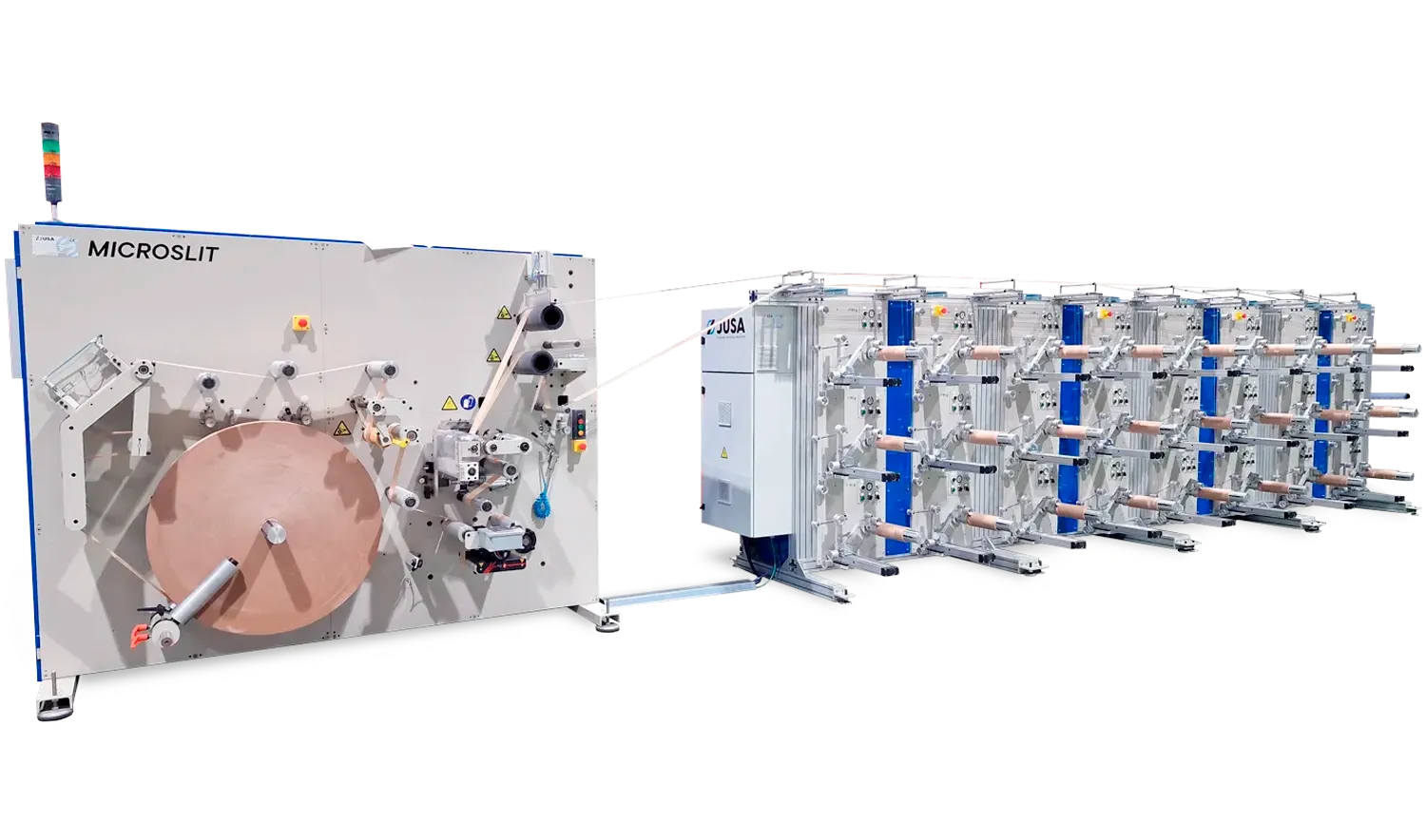
Industrial slitter rewinders can be configured to handle different materials, widths, diameters, and slitting systems according to process requirements.
In high-speed applications, maintaining the right balance between production speed, material stability, and precision is particularly important.
Tension Control in High-Speed Processes
Tension control is one of the fundamental elements in ensuring material stability during converting operations.
Tension must remain within appropriate parameters from unwinding through to rewinding.
Incorrect tension regulation can cause:
-
Material wrinkles.
-
Deformations.
-
Lateral web movement.
-
Variations in roll diameter.
-
Alignment problems.
-
Uneven rewinding.
-
Defects in subsequent processing stages.
As production speed increases, tension variations can have an even greater impact.
For this reason, equipment designed for high-speed production requires systems capable of continuously and precisely adjusting operating parameters.
Stable Rewinding for Uniform Rolls
The purpose of rewinding is not simply to wind the material onto another roll.
The finished roll must meet specific requirements for tension, alignment, winding density, and finish.
A poorly formed roll can be difficult to handle or cause problems when used in another machine.
During high-speed operation, several factors must be controlled:
-
Rewinding torque.
-
Pressure.
-
Tension.
-
Diameter.
-
Speed.
-
Material characteristics.
These parameters may change as the roll diameter increases.
An appropriate control system helps maintain more consistent rewinding conditions throughout the entire cycle.
Automation to Maintain Continuous Production
In high-speed roll converting equipment, automation helps reduce dependence on manual intervention and maintain a more consistent production rate.
It can be used to manage operations such as:
-
Speed control.
-
Tension regulation.
-
Positioning.
-
Format changeovers.
-
Parameter adjustments.
-
Recipe management.
-
Fault diagnostics.
-
Process monitoring.
-
Roll handling.
Automation also improves repeatability.
When the same products are manufactured regularly, saving production parameters helps reduce setup times and retrieve previously used configurations.
Controlled Acceleration and Deceleration
A machine’s maximum speed is not the only factor determining its production capacity.
It is also important to analyze how long the machine takes to reach that speed and how it behaves during acceleration and deceleration.
Sudden speed changes can cause tension variations or affect material stability.
Progressive speed regulation allows the line to accelerate or decelerate while maintaining greater control over the web.
This is particularly relevant in processes involving numerous cycles, roll changes, or stoppages during a single shift.
Reducing Roll Changeover Times
A machine capable of operating at high speed can lose much of its productivity if it needs to stop for extended periods between production runs.
For this reason, changeover times are another factor to consider when evaluating overall performance.
Measures that can help reduce these times include:
-
Simplifying loading and unloading.
-
Automating certain operations.
-
Streamlining adjustments.
-
Using production recipes.
-
Improving accessibility.
-
Integrating auxiliary handling systems.
-
Preparing cores and materials in advance.
Actual productivity depends both on operating speed and on how long the machine remains available for production.
Core Preparation for High-Output Production Lines
Cores must be prepared to the correct dimensions before rewinding begins.
In production lines with frequent changeovers or high output, this operation can become an important part of the workflow.
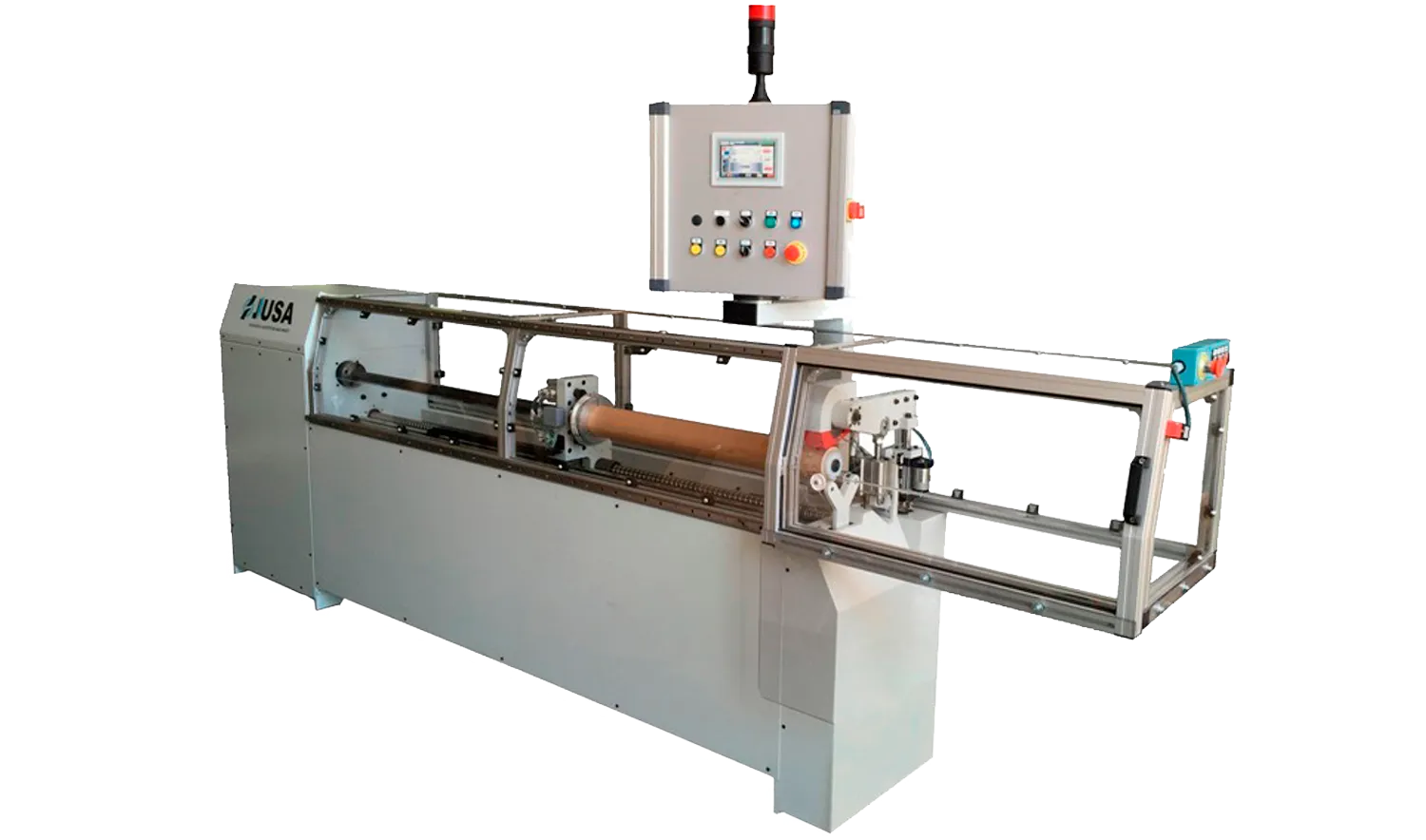
Core cutting machines make it possible to prepare tubes according to the widths required for each production run.
Depending on production volume, this process can be carried out using manual, semi-automatic, or automatic solutions.
Properly integrating core preparation with the rest of the production process helps prevent delays and ensures that cores are available when the line needs them.
Roll Handling in High-Speed Production Lines
As production line capacity increases, so does the volume of rolls that need to be loaded, unloaded, or moved.
For this reason, handling operations should be considered an integral part of the production process.
A high-speed machine can create a new bottleneck if finished rolls cannot be removed quickly enough.
Roll weight, diameter, and dimensions determine which auxiliary systems may be required to facilitate these operations.
Proper integration between the main machinery and handling systems helps maintain a more continuous production flow.
The Importance of the Material Being Processed
Not all materials behave in the same way as production speed increases.
Their physical properties can influence machine configuration and operating limits.
Factors to consider include:
-
Thickness.
-
Elasticity.
-
Rigidity.
-
Sensitivity to tension.
-
Coefficient of friction.
-
Composition.
-
Width.
-
Surface characteristics.
A thin, flexible film may require different settings from paper, laminates, or more rigid technical materials.
Therefore, production speed must be established according to the actual behavior of the material.
High Speed and Quality Must Go Hand in Hand
The objective of a high-speed production line should not simply be to achieve the highest possible number of meters per minute.
Productivity only improves if increased speed is accompanied by appropriate quality levels.
If operating faster leads to more waste, defects, or stoppages, the actual performance improvement may be much smaller than expected.
It is therefore important to find a balance between:
-
Speed.
-
Quality.
-
Stability.
-
Waste.
-
Availability.
-
Safety.
-
Material consumption.
-
Maintenance requirements.
Speed should be analyzed as one variable within the overall performance of the production line.
Maintenance of High-Speed Roll Converting Equipment
Machines operating at high production rates require appropriate maintenance to preserve their precision and reliability.
Wear on certain components can eventually cause vibrations, deviations, or minor performance losses that become more noticeable at higher speeds.
A preventive maintenance program may include inspecting:
-
Mechanical components.
-
Slitting systems.
-
Rollers.
-
Drives.
-
Sensors.
-
Tension control systems.
-
Safety components.
-
Electrical and automation components.
Identifying wear progressively helps reduce the risk of unexpected stoppages and maintain more consistent production conditions.
How to Measure the Performance of a High-Speed Production Line
Maximum speed is only one of the indicators that can be used to evaluate a production line.
It is also useful to analyze:
Average Production Speed
Shows the actual speed at which the machine operates during a shift or an entire production run.
Productive Time
Indicates how long the machine remains in production compared to the total available time.
Downtime
Helps identify losses caused by adjustments, incidents, maintenance, or changeovers.
Changeover Time
Measures how long the line takes to switch from one production run to the next.
Material Waste
Helps determine how much material is lost during adjustments, start-ups, or production.
Product Quality
Analyzes defects, rejected products, or rolls requiring reprocessing.
Production Volume
Makes it possible to compare machine capacity with actual output.
Analyzing several indicators together provides a much more useful overview than simply looking at the machine’s stated maximum speed.
Roll Converting Machinery Tailored to Each Production Process
The requirements of a production line can vary significantly from one company to another.
One operation may require high speed with only a few product specifications, while another may need to combine high operating speeds with numerous formats and frequent changeovers.
Other variables may include:
-
Materials.
-
Working widths.
-
Roll diameters.
-
Slitting systems.
-
Automation levels.
-
Handling requirements.
-
Integration with other equipment.
For this reason, configuring machinery according to the actual process helps prevent individual components from limiting overall production capacity.
At JUSA Converting, we design and manufacture solutions for slitting, rewinding, core preparation, and other operations involved in processing roll-fed materials, tailored to the specific requirements of each application.
What to Consider When Choosing High-Speed Roll Converting Equipment
Before specifying a new machine, it is important to analyze the entire process rather than focusing solely on the desired operating speed.
Key considerations include:
-
Materials to be processed.
-
Minimum and maximum working widths.
-
Roll diameters.
-
Required production speed.
-
Slitting system.
-
Tension requirements.
-
Frequency of format changeovers.
-
Production volume.
-
Level of automation.
-
Loading, unloading, and handling requirements.
This information makes it possible to design a solution that better matches actual operating conditions.
Higher Speed Requires Greater Control
High-speed roll converting equipment can significantly increase production capacity, but achieving high operating speeds requires precise control over the entire process.
Slitting, tension control, rewinding, automation, roll changes, and handling must work together in a coordinated way.
The key is not to make a machine run faster for a short period, but to ensure it can maintain a high production rate consistently, repeatably, and with the required quality.
Frequently Asked Questions About High-Speed Roll Converting Equipment
What Is High-Speed Roll Converting Equipment?
It refers to machinery designed to process materials supplied in rolls through operations such as slitting, rewinding, unwinding, or handling, operating at high speeds while maintaining control over the material.
What Factors Limit the Speed of a Roll Converting Line?
Speed may be limited by material type, tension control, the slitting system, rewinding, roll diameter, automation, and handling capacity.
Why Is Tension Control Important at High Speeds?
Because tension variations can cause wrinkles, deformations, lateral movement, or uneven rolls. At high speeds, these deviations can quickly affect a larger quantity of material.
Does Higher Speed Always Mean Greater Productivity?
Not necessarily. Productivity also depends on downtime, format changeovers, waste, quality, and machine availability. Speed must be evaluated alongside these factors.
What Materials Can Be Processed Using High-Speed Roll Converting Equipment?
Depending on the machine configuration, roll-fed materials such as plastic film, paper, aluminum, laminates, and other technical materials can be processed.
Can Roll Converting Equipment Be Customized to Meet the Requirements of Each Production Line?
Yes. Variables such as material type, width, diameter, speed, slitting systems, automation, and handling requirements can determine the configuration needed for each process.